
Blooming Anza-Borrego Desert in California
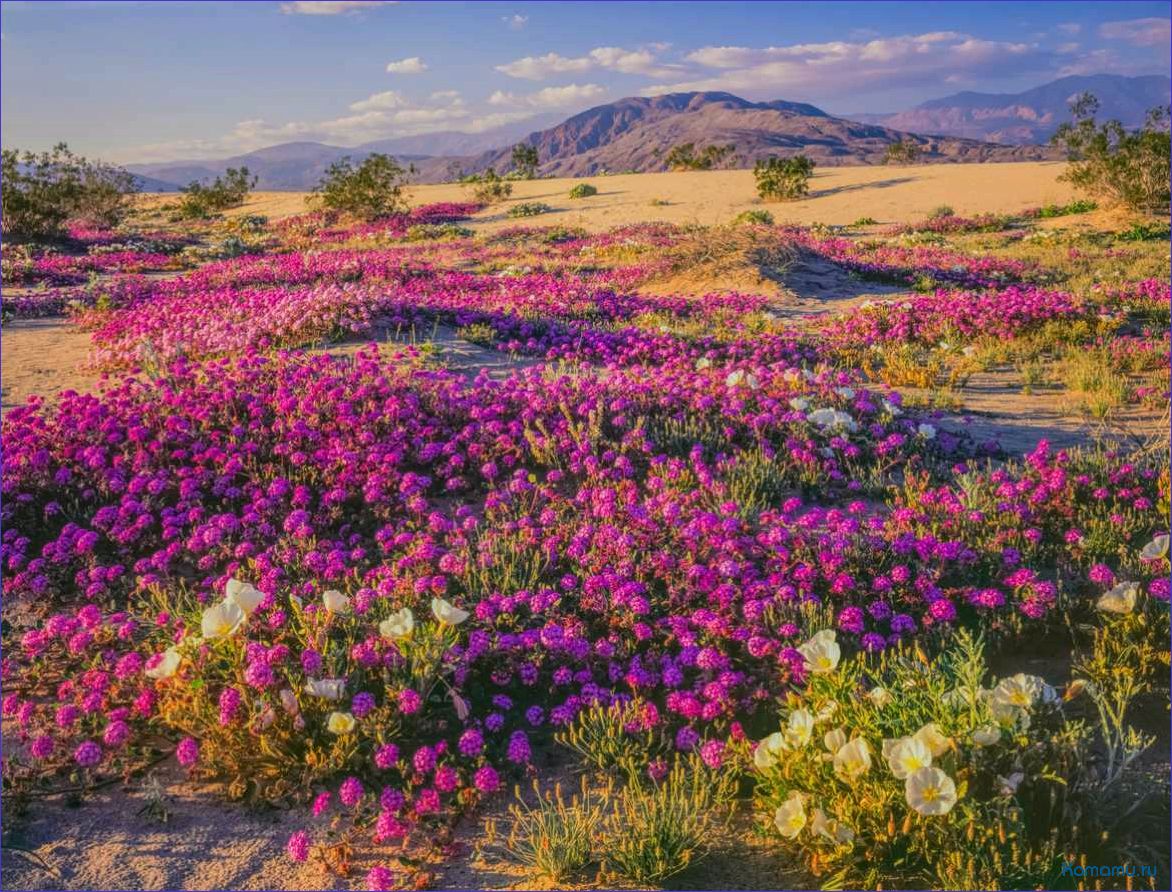
When nature suddenly comes to life, turning the harsh landscapes into a sea of colors, the heart is filled with joy and surprise. The combination of picturesque species and a unique ecosystem attracts many adventure seekers and nature lovers. It is a place that can surprise and inspire, showcasing an incredible diversity of flora and fauna.
Content of the article:
The western territories in the southwest, among the endless expanses of sand dunes and rocky mountains, hide incredible surprises. Here, where life seems impossible, a real miracle occurs: thousands of plants appear, forming picturesque paintings. Such a sight is rare, so to see it with your own eyes is a special pleasure.
Travelers arriving here can enjoy the amazing contrast of the wilderness and its colors. The unique flora and fauna of the region are a real treasure worth exploring. Observation of these natural processes becomes a real holiday for nature lovers, photographers and everyone who appreciates the beauty of the surrounding world.
When to visit this amazing place
Choosing the time to travel to this unique region is of great importance in order to enjoy its natural beauty to the maximum. Different seasons offer their own peculiarities and unique experiences to consider when planning your trip.
Winter-spring period: flowering time
The main peak of attendance comes in the winter-spring period, when the landscape is covered with bright colors of flowers. This time is perfect for nature lovers and photographers who want to capture rare and beautiful species of plants in full bloom. The temperature during this period is more comfortable, which makes walks and excursions especially pleasant.
February and March are the months when flowering is most intense. At this time, you can see many colorful carpets sloping the ground.
April is also a good time to visit as the flowering still continues but tourists are getting fewer.
Summer period: extreme conditions
In summer, temperatures rise significantly and conditions become more harsh for visitors. This time is less popular with tourists, but can still be of interest to seasoned travelers and explorers looking for seclusion and adventure.

Temperatures can reach extremes, so it’s important to be well prepared and have enough water and sun protection.
Some species of flora and fauna are active during this period, which can be interesting for naturalists and wildlife lovers.
Thus, when choosing the time to visit, it is important to consider both climatic conditions and personal preferences. Spring offers a wealth of colors and comfortable weather, while summer offers extreme conditions and unique opportunities for research.
Main routes for tourists
This section is devoted to the most interesting and popular routes that can be taken in a unique natural park. Here you will find a description of the trails, their length, level of complexity and features that await travelers on each of them. Regardless of your level of training, you will be able to choose a path that suits your abilities and interests.
Popular walking routes
-
- Palm CanyonThis route is ideal for family walks and nature lovers. The trail runs through a picturesque canyon with numerous palm trees and waterfalls, creating an amazing contrast to the surrounding landscape. The length of the road is about 3 miles (about 5 km) at both ends.
- Waterfall TrailFor those looking for a shorter but impressive route, this trail is perfect. It leads to picturesque waterfalls surrounded by rare species of flora and fauna. The length is 2.5 miles (about 4 km) at both ends, and the route is easy enough to walk.
This route is designed for more prepared tourists, as it includes a climb to one of the high points of the park. From the top there is a breathtaking view of the surrounding area. The length of the trail is about 6 miles (about 9.5 km) at both ends.
Routes for motorists
For those who prefer to explore nature by car, there are also several exciting routes.
-
- Highway of the Paths of ArtThis route will allow you to get acquainted with the unique sculptures and installations scattered throughout the park. The road stretches about 20 miles (about 32 km) across diverse landscapes and offers stops for photography and recreation.
A trip through this canyon will reveal the beauty of natural arches and unusual geological formations. The route is only available to high-clearance vehicles and takes about 15 miles (about 24 km) in one direction.
- Loop of the Lost ValleysThis route is a ring road that runs through several scenic valleys. The trail stretches about 30 miles (about 48 km) and is ideal for a day trip with the possibility of stops for picnics and sightseeing.
Each of these routes offers unique experiences and allows you to enjoy the beauty and diversity of nature. Choose a path according to your taste and level of preparation to get the most out of your adventure!
Rare plants and animals of desert region
Many areas of extensive arid territories have unique flora and fauna that have adapted to extreme conditions. In this section, we will look at some of the rarest and most interesting representatives of the flora and fauna of this region that make it truly unique.
Rare plants
The flora of the desert is represented by many species that have adapted to the harsh conditions of survival. They have learned to accumulate water, protect themselves from predators and survive extreme temperatures.
Cactuses: These plants are able to accumulate large amounts of water in their stems and leaves. They also have spikes that protect them from being eaten by animals.
Succulents: Succulents such as aloe and agave have fleshy leaves that retain moisture. This helps them survive long periods of drought.
- Annuals: Many annual plants only sprout and bloom for a short time after rains, quickly ending their life cycle before drought occurs.
Animals
The animal world of the region is no less diverse and interesting. Both small insects and large mammals live here, each of which has found its own way of adapting to life in difficult conditions.
Desert turtles: These reptiles can spend considerable time underground, avoiding the burning sun and retaining moisture.
Coyotes: Smart and adapted predators, coyotes can hunt both alone and in a herd, feeding on small mammals, insects and even the padala.
- Birds: Many species of birds, t


